

Last Updated: November 1, 2026
Quick Summary
The best leather handbags under $500 that actually last are built from full-grain or pebbled genuine leather with reinforced stitching at stress points, solid metal hardware, and a lined interior. Our picks, including the Waymark Work Tote and Hadley Top-Handle, are all positioned below $500. Check current product pricing, then compare leather, construction, straps, hardware, and repairability before you buy.
- Full-grain leather is the outermost layer of the hide with the grain intact and the most durable type you can buy.
- All five featured picks, from the Waymark Work Tote to the Harper Saddle Bag, sit comfortably below the $500 mark; current prices and promotions are shown on each product page.
- Leather bags usually fail first at strap and handle anchors, where stitching pulls through thin leather.
- Divide price by expected days of wear, and include maintenance and repair costs in that math.
- Never store leather in a plastic bag, because trapped moisture causes permanent mildew damage.
Leather, stress-point stitching, hardware, lining, shape retention, and how often you will actually carry it.
Table of Contents
- What Makes Affordable Luxury Leather Handbags Actually Last
- The Best Leather Handbags Under $500 That Hold Their Shape
- How to Choose a Quality Leather Handbag Before You Buy
- How Long Should a Quality Leather Handbag Last?
- Leather Handbag Care Tips That Add Years of Wear
- How to Compare Cost Per Wear and Pick Your Everyday Bag
- Frequently Asked Questions
What Makes Affordable Luxury Leather Handbags Actually Last
The best affordable luxury leather handbags under $500 that actually last are built from full-grain or pebbled genuine leather, reinforced stitching at stress points, solid metal hardware, and a structured lining that holds its shape.
Price tells you little about longevity. What matters is the hide and how the panels are joined. For a closer look at affordable quiet luxury bags, see our related guide.
Leather Type and Construction: What the Label Won't Tell You
Full-grain leather is the outermost layer of the hide with the grain intact, and it is the most durable type you can buy. Pebbled leather is genuine leather with a textured finish.
Labels are deliberately vague. "Genuine leather" is a legal term, not a quality grade, and it can describe a thin split under a plastic coating. Look instead for:
- Reinforced stitching at handles and strap anchors, not just along the seams
- Protective metal feet on the base, which keep the leather off wet floors and abrasive surfaces
- A lined interior with a secure zip compartment, because unlined bags stretch and sag
Look for substance and natural grain rather than a thin, papery feel.
Handles and straps should be reinforced where the bag carries weight.
A reinforced base and protective feet help reduce daily surface wear.
Good organization and secure interior construction matter as much as the exterior.
The Best Leather Handbags Under $500 That Hold Their Shape
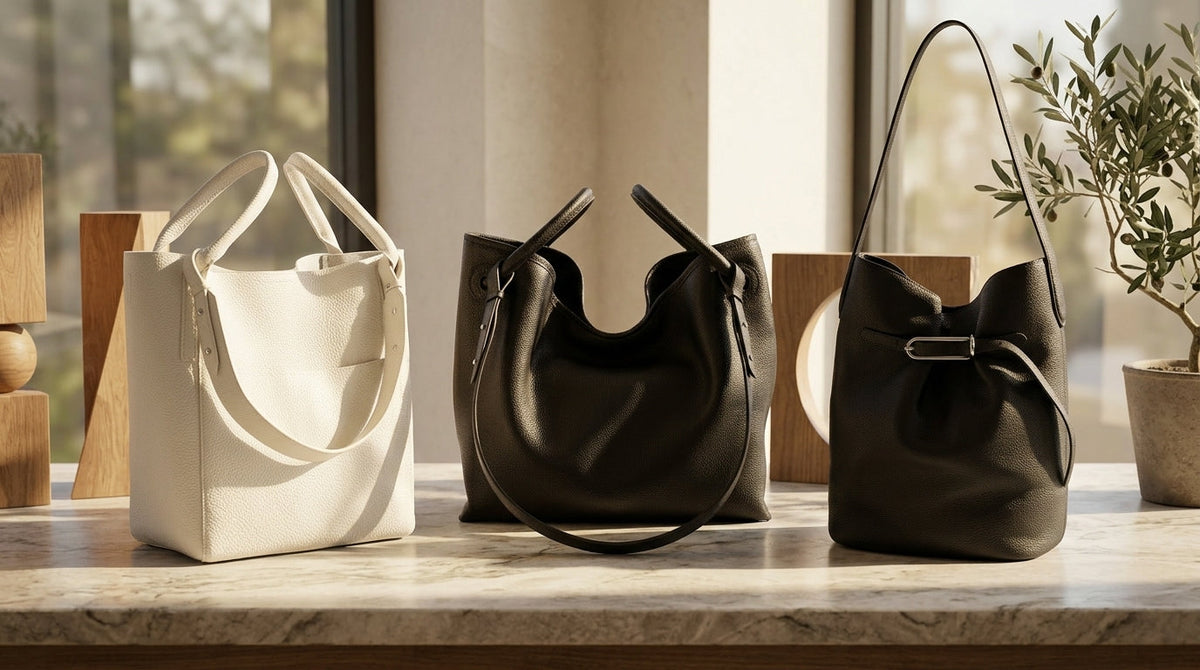
Five leather shapes worth comparing
Use these as a quick visual reference for structure, size, and everyday carry style.


Structure affects how a bag holds its shape over time. The picks below are organized by how you'll carry them.
| Bag | Style | Price | Best For |
|---|---|---|---|
| Waymark Work Tote | Structured tote | Regular $149 · View current price | Laptop commutes, office days |
| Hadley Top-Handle | Structured top-handle | Regular $149 · View current price | Polished meetings, hands-free wear |
| Ellis Crossbody Satchel | Crossbody satchel | Regular $149 · View current price | Day-to-night versatility |
| Marais Pocket Hobo | Hobo shoulder bag | Regular $149 · View current price | Roomy everyday carry |
| Harper Saddle Bag | Saddle shoulder bag | Regular $149 · View current price | Casual outfits, weekends |
Totes and Structured Bags for the Office
The Waymark Work Tote is made from pebbled leather and features double top handles and a fixed shoulder strap. If you're still deciding, our guide on how to choose a work tote bag walks through what to look for. You can browse the full totes collection to compare options.
For a cleaner architectural line, the Hadley Leather Top-Handle Bag adds a double zip opening, a reinforced base, and a detachable shoulder strap.

Elegance without the designer markup
The Waymark is the roomier tote option; the Hadley gives you a more compact, architectural top-handle shape.
Crossbody, Hobo, and Top-Handle Picks for Everyday Wear
The Ellis Leather Crossbody Satchel features a domed silhouette, top zip, top handles, and a detachable adjustable strap. The Vega Crossbody Satchel features a front strap detail. The Marais Pocket Hobo features a top handle and two side pockets, while the Solenne Soft Hobo in nude has a soft hobo shape. See all the hobo bags in one place.
How to Choose a Quality Leather Handbag Before You Buy
Consider these questions before you buy:
- Does the leather feel substantial, or thin and papery?
- Are the handle anchors stitched and reinforced, not just riveted?
- Does the bag stand on its own when empty?
- Is the interior lined, with at least one zip closure?
A common mistake is judging a bag by its exterior alone. Flip it over: the base and strap attachments take the most abuse, and that's where cheap construction shows first.
How Long Should a Quality Leather Handbag Last?
Genuine leather handbags can last for years with regular use and proper care. Leather can develop a patina over time. The following are common failure points you can inspect before you buy.
Where Leather Bags Actually Fail
Leather bags commonly show wear at a few recurring points:
The base tells you a lot.
Bottom panels, corner seams, and protective feet reveal how a bag is expected to handle everyday contact with desks, floors, and other surfaces.
See the Waymark construction →
- Strap and handle anchors. The stitching or rivets joining handle to body take the full weight of the bag every time you lift it. When a bag fails at eighteen months, this is usually where it starts, anchor stitches pull through thin leather or rivet backs work loose.
- Edge paint along the top rim and strap edges. Edge paint is a finish, not structure. It cracks at fold points first, then flakes, and once it lifts, the raw edge absorbs moisture and darkens unevenly.
- Lining separation at the seams. A glued-in lining detaches at the top seam before a stitched one does. Once the lining pulls free, the bag loses shape and small items migrate into the gap between lining and shell.
- Hardware finish wear. Plated hardware rubs through at strap rings and zipper pulls, exposing base metal. Solid brass or stainless wears to a patina; thin plating wears to a dull gray ring.
Repairability, Warranty, and Aftercare: The Part Most Guides Skip
Longevity is not only about how a bag is built. It is also about whether it can be fixed. Before you buy, ask three questions:
- Can the strap be replaced? A detachable strap with standard hardware can be swapped or repaired independently. A stitched-in strap usually means the whole bag goes back for service or gets retired.
- Does the brand offer repair or replacement parts? Ask whether a brand offers repair or replacement parts.
- What does the warranty actually cover? Read a warranty's terms, including its exclusions, before you buy.
Aftercare is the third leg. Rotating bags gives leather a rest day to dry and recover shape. Storing stuffed with light filler in a breathable dust bag, away from direct sunlight, prevents creasing and fading. The Federal Trade Commission's guidance on textile and leather labeling sets out what manufacturers may legally claim on a label, and it's worth knowing your rights before you spend.
For a deeper routine, our guide on how to keep a leather bag looking new walks through conditioning schedules and stain removal step by step.
Leather Handbag Care Tips That Add Years of Wear
For a deeper routine, our guide on how to keep a leather bag looking new walks through conditioning schedules and stain removal step by step.
How to Compare Cost Per Wear and Pick Your Everyday Bag
Divide the price by the number of days you expect to carry it. That math reframes the decision: the cheapest bag per wear is the one you actually reach for.
But purchase price is only the first input. A bag that needs a $40 strap replacement in year two, or a $60 conditioning and edge-paint touch-up, is not the same value as one at a similar purchase price that needs neither.
The goal is not the lowest sticker price. It is a bag you use often enough that the purchase earns its place in your wardrobe.
A Realistic Cost-Per-Wear Model
Use three inputs: purchase price, expected days of wear, and estimated lifetime maintenance and repair.
The lesson is not that cheap bags win. A bag you carry often and maintain well beats a more expensive bag that sits in the closet, and a bag with replaceable parts beats one retired when a single strap fails.
Verify the Price and the Leather Before You Compare
Cost-per-wear math only works if the price is real and the material is what the label implies. Before you commit:
- Confirm the bag is genuine leather, not bonded or a "leather blend." Bonded leather is leather dust glued to a backing and cracks at fold points within a couple of years regardless of care.
- Check whether the price is regular or sale-only. A bag normally above $500 but marked down is not an under-$500 bag in the same sense as one that sits there every day; sale pricing moves, and so does the comparison.
- Watch for currency and unit differences. Prices quoted in other currencies or in different sizes can make a bag look cheaper than the version you would actually buy.
- Re-check the price at checkout. Listed prices change; the number that matters is the one on the order confirmation.
Five silhouettes. One easy starting point.
You can swap any of these images later — every card is already linked to its product page.
Frequently Asked Questions
How can you tell if a leather handbag is good quality before ordering?
Look at what the listing actually specifies: leather type, lining, hardware finish, stitching, and closure. Pebbled genuine leather with reinforced handles, a lined interior, and a secure zip compartment signals real construction rather than a coated look. Read owner feedback for wear patterns over months rather than first impressions. A bag described only in vague terms with no material detail is a warning sign.
How long should a quality leather handbag last with regular use?
Lifespan depends on factors such as leather type, construction, and how you store the bag.
Are affordable luxury handbags under $500 worth buying compared to designer bags?
Value comes down to cost per wear. A leather tote carried to work five days a week for three years can cost very little per use, while a bag that sits in a closet delivers far less value for the same purchase price. Affordable luxury focuses spending on leather and construction instead of brand markup. Compare leather quality, interior organization, and strap comfort rather than the label. True Couture offers free shipping on orders over $149.
What leather handbag care tips matter most for everyday bags?
Store your bag stuffed with light filler in a dust bag away from sunlight, and never hang it by the strap. Keep pens capped and liquids sealed inside to help avoid interior stains.
The real challenge isn't finding a leather bag under $500. It's finding one whose construction justifies the money. True Couture builds small, intentional production runs around pebbled genuine leather, reinforced stitching, and interiors designed for real schedules, with free shipping on orders over $149. Get started with True Couture and carry a bag that still looks sharp in year five.
Structured tote, top-handle, satchel, or hobo?
The best value is the bag that works with your real routine — not the one that only looks good on a shelf.


