

Last Updated: October 31, 2026
Quick Summary
Consistent leather bag care keeps a bag looking new: wipe it weekly with a soft cloth, clean and condition every 3–4 months, and waterproof it every few months. Store it stuffed in a breathable dust bag in a cool, dry place away from sunlight, and patch test every product first.
- Clean leather with a soft, barely damp cloth and a leather-specific cleaner, never household soap.
- Condition every 3–4 months to replace lost oils and prevent cracking, applying a thin even coat.
- Never dry a wet bag near heat or sunlight; stuff it with plain paper and air-dry at room temperature.
- Store bags in cotton or flannel dust bags, never plastic, which traps moisture and invites mildew.
- Patch test every cleaner, conditioner, and protectant on a hidden area for at least 24 hours.
Care advice for the Waymark leather collection
Use the same gentle routine across all three pebbled leather colors.
Table of Contents
- Step 1: Gather the Right Leather Care Supplies
- Step 2: How to Clean a Leather Bag Without Damaging It
- Step 3: How to Condition a Leather Bag to Prevent Cracking
- Step 4: How to Protect a Leather Bag from Water and Everyday Damage
- Step 5: How to Store Leather Bags to Keep Their Shape
- Build a Care Schedule Around Your Routine
- Frequently Asked Questions
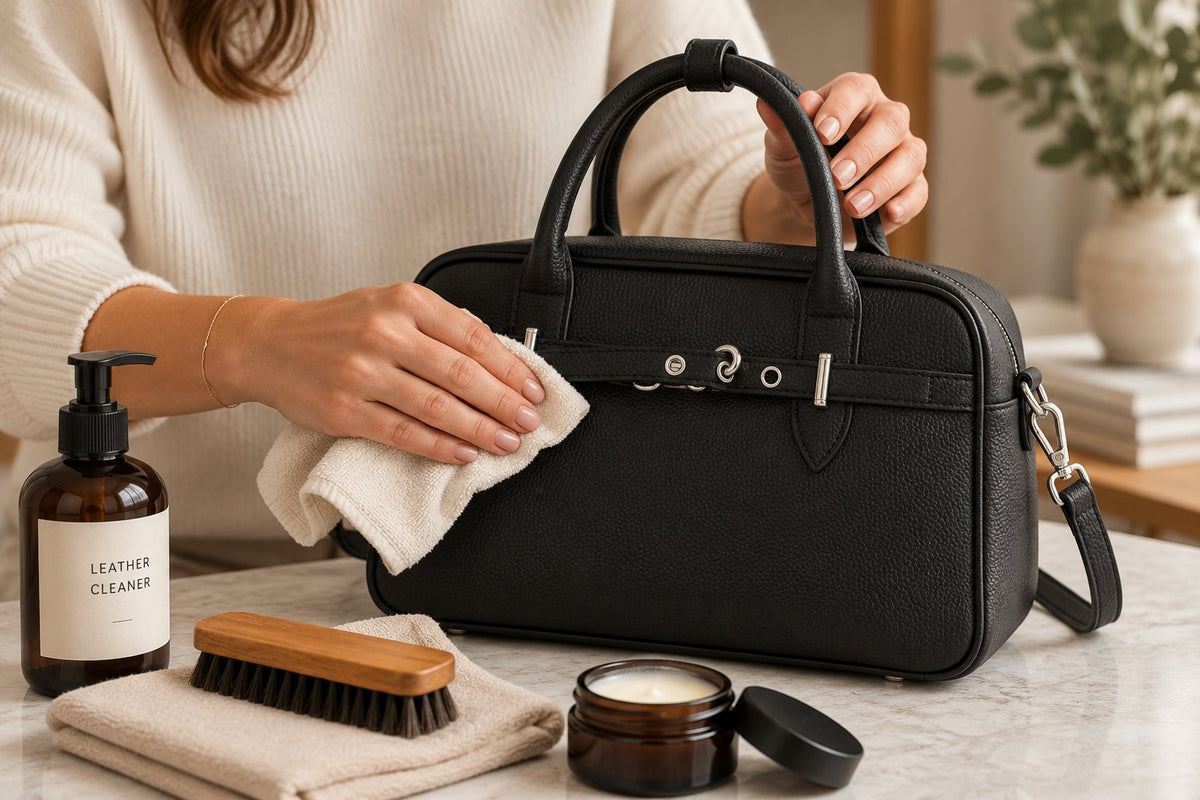
Wipe away surface dust with a soft cloth.
Clean and lightly condition finished leather.
Check storage, shape, straps, and hardware.
Patch test products before treating visible leather.
Step 1: Gather the Right Leather Care Supplies
Quality leather bag care starts with a small, honest toolkit. You do not need a cabinet full of products. You need four things, and you need to know what to keep away from your bag.
Here is what actually earns a spot on your shelf:
- A soft cloth: microfiber or clean cotton works best for wiping.
- A soft leather brush: for seams, stitching, and textured finishes.
- A leather cleaner: a mild, leather-specific formula, never household soap.
True Couture bags are made from pebbled leather, which rewards simple, consistent care. For a close-up example, see the Waymark in Brown, Waymark in Black, or the lighter Waymark in Cloud. If you want to see which styles this advice applies to, browse our leather bags collection. You can also read more about True Couture and the materials we choose.
Pebbled leather, three everyday neutrals
What Not to Use on Leather
Some common products do real damage. Skip them:
- Baby wipes and alcohol-based sanitizers, which strip oils.
- Harsh soaps and detergents, which dry out the surface.
- Paper towels, which leave lint and can scratch.
Step 2: How to Clean a Leather Bag Without Damaging It
Clean your leather bag with a soft, barely damp cloth and a leather-specific cleaner, working in small circles. Wipe gently, let the surface air-dry, then brush the seams. Most damage comes from scrubbing too hard or using too much water.

Fine pebbled grain responds best to gentle wiping, light conditioning, and careful storage.
View the Brown Waymark →Match the Method to the Leather Type
Not every leather takes the same treatment. Before you touch a cloth to the surface, identify the finish:
- Smooth and finished leather (pebbled, full-grain, top-grain): A barely damp microfiber cloth plus a mild leather cleaner is safe. Work in small circles and buff dry.
- Suede and nubuck: Never use a wet cloth or liquid cleaner. Brush with a suede brush to lift nap, use a suede eraser on scuffs, and treat stains with a suede-specific cleaner applied to a cloth, not the bag. Water can leave a permanent ring.
- Patent and coated leather: Wipe with a soft damp cloth only. Avoid conditioners and oils, which sit on the surface and dull the shine. Do not use abrasive cloths, which scratch the coating.
If you are unsure which finish you have, test in a hidden spot first (see below) and start with the gentlest method.
Routine Wiping and Brushing
Dirt and debris act like sandpaper over time. Wipe your bag down weekly, and brush the seams and textured areas every few weeks. A soft cloth lifts surface dust before it works into the grain. For pebbled and grained leather, a soft brush reaches the crevices a cloth misses. This is especially useful on textured everyday styles such as the black pebbled Waymark and Vega satchel. For smooth leather, skip the brush and use the cloth only.
Patch Test Before You Treat
Every cleaner, conditioner, and protectant should be tested before it touches the visible surface. Apply a small amount to a hidden area, inside a pocket, under the flap, or on the bottom panel, and wait at least 24 hours. Check for color shift, dulling, darkening, or tackiness. If the leather looks different, do not proceed. A patch test takes a day and prevents the most common DIY disasters.

Step-by-Step Stain and Damage Response
Treat stains promptly, but treat them correctly. The wrong response does more harm than the stain.
- Water spots: Blot gently with a dry cloth, then let the bag air-dry away from heat. Do not rub. If a ring remains after drying, a leather cleaner applied to a cloth and worked gently from the outside of the ring inward can help. If the spot is large or the leather is suede, stop and consult a professional.
- Oil and grease: Blot immediately with a dry cloth to lift what you can. Do not add water, which can spread the oil. Apply a small amount of leather cleaner to a cloth and work gently. For suede, use a suede eraser or absorbent powder, then brush. Deep oil stains often need a professional.
- Ink: Act fast. Blot, do not rub. A leather-specific ink remover applied to a cloth, never directly to the bag, is the safest first step. Rubbing ink spreads it and can lift the finish. If the ink has set or the leather is light-colored, stop and seek professional help.
Step 3: How to Condition a Leather Bag to Prevent Cracking
Condition a leather bag every few months to replace lost oils and stop drying, cracking, and peeling. Apply a small amount of leather conditioner with a soft cloth, work it in evenly, and buff off the excess.
Conditioning is what keeps leather soft and slows the aging process. On frequently carried pieces such as the Brown Waymark work tote, a light, even application is better than saturating the leather. A thin, even coat beats a heavy layer every time. Pay attention to corners and edges, where cracking tends to start first.
Step 4: How to Protect a Leather Bag from Water and Everyday Damage
Protect a leather bag from water with a leather-specific waterproofing spray, applied in a thin layer on a clean, dry bag. Reapply every few months. Rain, humidity, and everyday bumps are the main threats to a bag's finish.
If you carry your bag daily, compare the Black Waymark, Cloud Waymark, or browse our women's leather handbags built for regular wear.
Drying a Wet Bag Safely
Never set a wet bag near a radiator, heater, or in direct sunlight. Stuff it with plain paper to hold its shape and let it air-dry at room temperature. Heat is what causes leather to crack and warp.
Step 5: How to Store Leather Bags to Keep Their Shape
Store leather bags stuffed, in a dust bag, in a cool, dry place away from sunlight. Proper storage preserves shape and prevents moisture damage. It is the step most people skip, and it matters most.
Dust Bags, Cool Dry Places, and Sunlight
Keep your bag in its dust bag when not in use. Avoid humid closets, direct sunlight, and plastic bags, which trap moisture. Rotate your bags so each one gets a rest. If you are deciding which bag to keep in rotation, our guide to neutral handbags that go with everything can help.
Build a Care Schedule Around Your Routine
A care schedule keeps leather bag care from becoming a chore. For more expert leather care tips and styling guides, explore our Minimalist Leather Bag Guides & Fashion News. Match it to how often you carry the bag and the conditions you face. The table below is a starting point; adjust it for leather type, climate, and how hard the bag works.
Task |
How Often |
Best For |
|---|---|---|
Wipe with soft cloth |
Weekly |
All leather types |
Brush seams and texture |
Every few weeks |
Pebbled and grained leather |
Clean and condition |
Every 3–4 months, or twice a year |
Preventing cracking |
Waterproofing spray |
Every few months |
Rain and humidity |
Full storage check |
Seasonally |
Shape and moisture control |
Adjust the Schedule to Use and Environment
- Daily carry: Wipe weekly, condition every 3 months, and check hardware and straps monthly. High-use bags dry out faster and collect more grit in seams.
- Occasional use: Condition twice a year and do a full storage check each season. A bag that sits can still dry out, and stored leather can develop mildew if the closet is humid.
- Humid climates: Check for mildew monthly, keep the bag out of damp closets, and avoid plastic bags, which trap moisture. A silica packet in the dust bag can help, but replace it regularly.
Long-Term Storage and Shape Preservation
Storage is where most long-term damage happens, and it is the step most people skip. Different silhouettes need different support: a structured piece such as the Calder top-handle bag benefits from light stuffing, while a softer Marais hobo should keep its natural drape.
- Empty the bag completely. Left-behind receipts, pens, and crumbs attract moisture and pests, and a forgotten pen can leak.
- Stuff it to hold shape. Use plain, unprinted paper or a soft cloth, not newspaper, which can transfer ink. Stuff the body and the straps so they do not crease.
- Position the straps. Coil straps loosely inside or lay them flat so they do not develop sharp bends. Avoid hanging a heavy bag by one strap for long periods.
Different silhouettes need the same careful storage habits

If you are deciding which bag to keep in rotation, our guide to neutral handbags that go with everything can help.
Choose the shape that fits your routine
Every style below uses the same care principles, with small adjustments for structure, straps, and storage.

Warm pebbled leather with everyday structure.

Classic black pebbled leather for daily rotation.

Light neutral leather that benefits from regular gentle wiping.

Store softly supported to preserve its natural drape.
Frequently Asked Questions
How often should you condition a leather bag?
Conditioning twice a year is a solid baseline for most bags. If you carry yours daily, live in a dry climate, or notice the leather feeling stiff, condition every three to four months. Apply a small amount of leather conditioner with a soft cloth, let it absorb for 15 to 20 minutes, then buff off any excess. Over-conditioning can leave a sticky residue, so watch how the leather responds rather than sticking to a rigid calendar.
Can you use household products to clean leather bags?
Skip vinegar, rubbing alcohol, baking soda, and household cleaners. These strip the leather's natural oils and can cause drying, cracking, or color loss. Use a leather cleaner and a soft cloth instead. For quick touch-ups, a barely damp cloth works for fresh dust. Always patch test any product on a hidden area first, and avoid harsh soaps that leave residue behind. Leather-specific products cost a little more but protect your bag's finish.
What should you do if a leather bag gets wet?
Blot the water with a dry soft cloth, then let the bag air-dry at room temperature away from heat and direct sunlight. Never use a hair dryer or radiator, which can crack the leather. Stuff the bag with plain paper or a cloth to hold its shape while drying. Once dry, condition the leather to restore moisture. For future protection, apply a waterproofing spray designed for leather and reapply it every few months.
How should you store a leather handbag when you are not using it?
Store it in a dust bag in a cool, dry place away from direct sunlight and heat. Stuff the interior with tissue or a soft cloth to keep its shape, and leave the zipper slightly open for airflow. Avoid plastic bags, which trap moisture and encourage mildew. If you stack bags, place heavier ones on the bottom. Rotating your bags every few weeks also gives leather a chance to breathe and prevents creases from forming in the same spots.
Leather ages best when you give it steady, simple attention. You can explore the full True Couture leather collection or shop the Brown, Black, and Cloud Waymark directly. At True Couture, we design bags with lasting leather construction and practical interiors so they hold up to real daily use. Our totes feature reinforced handles and premium hardware, plus a semi-structured interior with a central zip compartment to keep your essentials organized. Free shipping applies on orders over $149. Get started with True Couture and keep your bag looking new for years.
Shop the Waymark in your neutral
Choose Brown, Black, or Cloud — all in genuine pebbled leather.


